Your Gear Is a Capital Asset — Insure It Like One
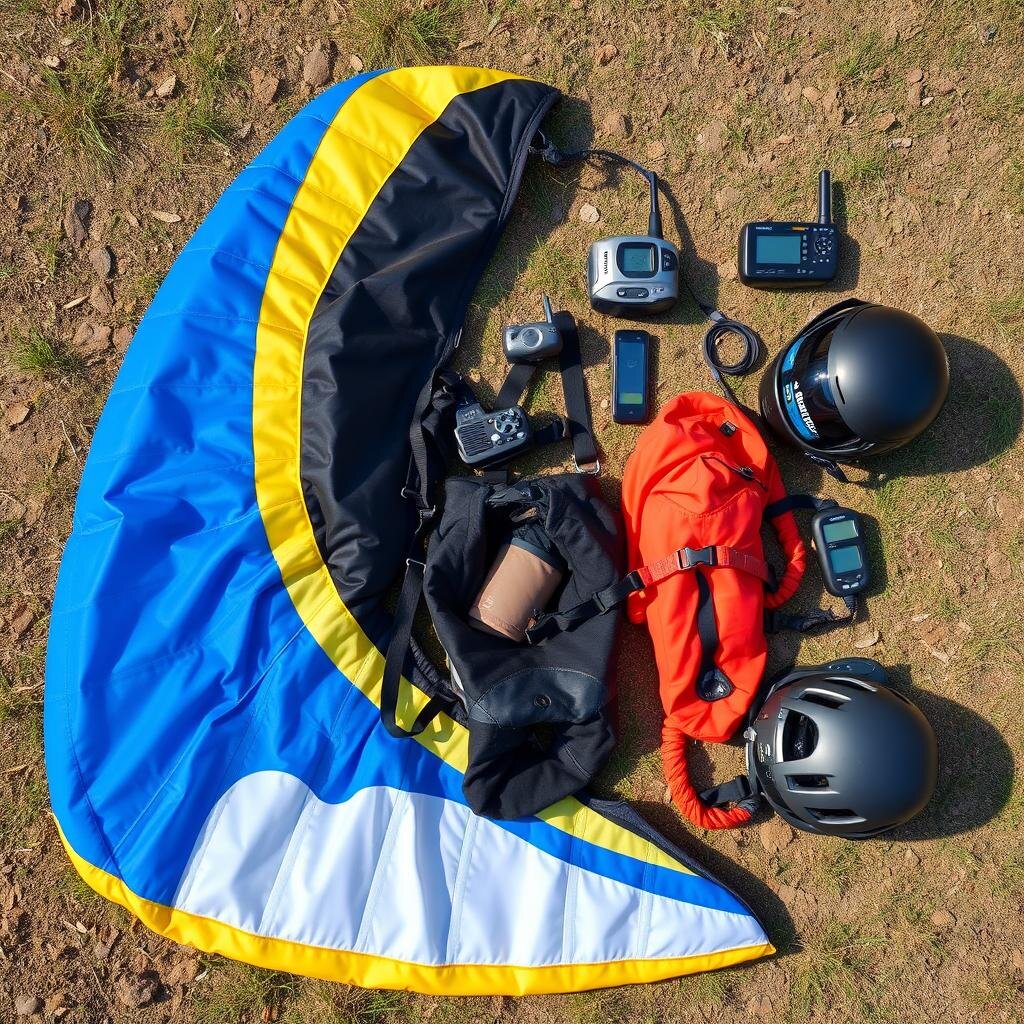
Walk into the storage room of any working paragliding school and you are looking at serious money on the racks. A single certified tandem wing runs $4,500–$6,500. A solo school glider is $3,500–$5,000. Add harnesses at $700–$1,500 each, reserve parachutes at $700–$1,200, plus radios, varios, and tandem spreader bars, and a modest rental and instruction fleet quietly represents $30,000 to well over $100,000 in replaceable equipment.
Most owners insure their liability exposure carefully and then assume their gear is "covered somewhere." It usually is not — at least not the way they think. Standard commercial property policies were written for desks, inventory, and buildings, and they handle mobile aviation equipment poorly. This is where dedicated equipment coverage earns its keep.
Why Standard Property Policies Fall Short
A business owner's policy (BOP) or general property form typically protects property *at a fixed location*. Paragliding gear, by definition, does not stay put — it goes to launch, into a vehicle, up a mountain, and across state lines to competitions and clinics. The moment a wing leaves the premises, a standard property policy often stops responding.
Inland marine coverage solves this. Despite the nautical name, inland marine is the insurance category built for property that *moves*. For a paragliding school it provides:
- Coverage that follows the gear, not the building — at the launch, in transit, at a fly-in, or stored off-site.
- Theft protection for equipment taken from a vehicle, a trailer, or a storage unit.
- Accidental physical damage — a wing torn on a rocky launch, a harness damaged in a tree landing, a vario cracked in a hard touchdown.
- Broad transit coverage for the drive to and from your sites, which is where a surprising amount of gear loss actually happens.
What's Covered — and What Isn't
Equipment coverage is generous, but it is not a wear-and-tear contract. Knowing the line keeps your claims clean and your expectations realistic.
Typically covered
- Sudden, accidental damage: snags, tears, abrasion from a bad landing, impact damage.
- Theft and burglary, including from a locked vehicle or trailer.
- Fire, flood, and other named or all-risk perils depending on the form.
- Loss in transit between storage and launch.
Typically excluded
- UV degradation and porosity wear — the gradual breakdown of canopy fabric over its flight hours. This is maintenance, not an insurable loss.
- Manufacturer defect — that's a warranty matter against the maker, not a property claim.
- Wear, tear, and deterioration from normal use, mildew from improper storage, or rodent damage.
- Mysterious disappearance on some forms (gear that simply goes missing with no evidence of theft).
The takeaway: equipment coverage protects against *events*, not against the wing aging out. Retire gliders on schedule and document your maintenance — it keeps coverage clean and claims defensible.
Scheduling High-Value and Fleet Gear
How your gear is listed on the policy matters as much as the limit.
- Schedule your high-value tandem rigs individually. A $6,000 tandem wing, its reserve, and its spreader bar should be itemized by make, model, and value. Scheduled items pay faster and at the documented amount, with fewer disputes.
- Blanket your rental and demo fleet. A pool of student gliders and demo wings can be covered under a single blanket limit that flexes as the fleet turns over, rather than re-endorsing the policy every time you swap a wing.
- Keep a living inventory. Serial numbers, purchase dates, and photos turn a contested claim into a same-week reimbursement. Update it each season.
Replacement Cost vs. Actual Cash Value
This single choice decides how much you actually collect after a loss.
- Actual Cash Value (ACV) pays the *depreciated* value. A three-year-old wing you bought for $5,000 might settle for $2,500 — and you still need $5,000 to get airworthy again.
- Replacement Cost (RC) pays what it costs to buy a comparable new wing today, with no depreciation haircut.
For a school that *must* keep flying to earn, RC is almost always the right call. The premium difference is small relative to the gap it closes when you are grounded waiting on a payout.
Build the Right Equipment Program
Paragliding equipment is specialized, mobile, and expensive — exactly the profile that generic property insurance handles worst. Contractors Choice Agency writes equipment and inland marine coverage tailored to free-flight schools: scheduled tandem rigs, blanket rental fleets, transit and off-premises protection, and replacement-cost settlement so a single bad landing doesn't ground your season.
Have your fleet valued and your coverage structured by people who understand what a wing actually costs to replace. Call 844-967-5247 to review your equipment and get a quote built around your gear.